Researchers at Jena University in Germany proposed a 10kW coherent combined ultrafast fiber laser system
2021-09-27 09:44:07
Source:Oenews
Read: 2040
Precision material processing on an industrial scale requires high-power ultrafast lasers, such as the production of solar cells and lithium batteries. Fiber laser is very suitable for coherent beam combination because of its repeatability and simple setting. So far, researchers have proposed many techniques for coherent beam combination of fiber amplifiers. Here, Michael m ü ller et al. Proposed an ultrafast laser with an average output power of 10.4 kW based on the coherent combination of 12th order refractive index fiber amplifiers. The system emits 254 fs pulses close to the conversion limit at a repetition rate of 80 MHz, and has high beam quality (M2 ≤ 1.2) and 0.56% low relative intensity noise in the frequency range of 1 Hz-1 MHz. Furthermore, the researchers give the analysis of the system output parameters, and discuss the technical limits and further power upgrading potential. This work is published on Optics Letters.
Precision material processing on an industrial scale requires high-power ultrafast lasers, such as the production of solar cells and lithium batteries. The most advanced lasers are ytterbium doped thin disk, slab and fiber chirped pulse amplifiers, which provide an average power of 1 kW in fundamental mode operation. Nevertheless, the thermal load limits the achievable average power through thermal lens in thin disk and slab lasers or transverse mode instability in fiber lasers. Similarly, nonlinear refraction and Raman scattering set limits on the achievable peak power.
The coherent beam combination of several amplifiers in the interferometric device can exceed these limits. In a typical scheme, n amplifiers are seeded by a common source and their output beams are interfered by phase length. Ideally, a single output beam will be generated, and its brightness is up to N times that of a single amplifier channel. In practice, the deviation of the spatial and temporal output characteristics of the amplifier will lead to loss, which is quantified by the combination efficiency and defined as the ratio of the combined power to the sum of the output power of all individual amplifiers. Compared with a single amplifier, coherent beam combination allows power to be increased by an order of magnitude, because passive combined elements support higher peak and average power than laser active media, at the cost of phase stability to maintain phase length interference.
Fiber laser is very suitable for coherent beam combination because of its repeatability and simple setting. So far, researchers have proposed many techniques for coherent beam combination of fiber amplifiers, such as tiled aperture combination based on diffraction and filled aperture combination using diffractive optical elements, dielectric polarization and intensity beam splitter. For Gaussian beams, the filled aperture combination is more effective, so it is better than the tiled aperture combination when the theoretical maximum efficiency is 100% and 68%. In the filled aperture scheme, the intensity beam splitter has some practical advantages. For example, compared with the polarization beam splitter, the coating absorption is lower, the cost is lower than the diffractive optical element, and it is easy to replace when damaged, resulting in the realization of 3.5 kW average power ultrafast laser.
The schematic diagram of the experimental device is shown in Figure 1. The seed source is an ultrafast optical fiber oscillator that emits pulses at a repetition rate of 80 MHz. The seed pulse is stretched to a full width of 5 ns in a set of chirped fiber Bragg gratings for hard cutting of 14 nm spectrum centered at 1046 nm. A dual core pump preamplifier is embedded in this part to compensate the transmission loss of the grating. A spectral amplitude and phase shaper is inserted to compensate the gain shaping and nonlinear phase accumulation in the later amplification stage, so as to improve the output pulse quality. The other two core pumped preamplifiers increase the seed power from a few milliwatts to one watt at the end of the polarization maintaining all fiber front end.
Interference superposition is easily affected by air flow and mechanical vibration, so it needs active stability. Here, optical coherence locking by single detector electronic frequency marking is used. In this technology, small sinusoidal phase jitter of different frequencies is applied by piezoelectric driving mirror. This will cause small output intensity jitter, Using photodiodes (PD1). Using the initial sine wave to demodulate the photodiode signal will produce an asymmetric error signal with zero crossing at the interference extreme value of each channel. The error signal is used to realize the closed-loop stability of the system under phase length interference through the piezoelectric driving mirror. Select the dithering frequency from 6.5 kHz with an interval of 1.5 khz-21.5 kHz to ensure that the dithering frequency is higher than the requirements of typical phase Balance the disturbance frequency, lower than the limit of the control electronic equipment, and separate it as far as possible to obtain the maximum stable bandwidth and the minimum crosstalk. The seed free space is coupled to a 5 m long non polarization maintaining ytterbium doped step index fiber with 20? M core and 400? M cladding diameter (numerical aperture is 0.45). The optical fiber is wound to 12 cm diameter to suppress the high-order mode. It is equipped with a flat parallel antireflective coating end cover and installed in a water-cooled housing for powerful high-power operation. Stable linear output polarization can be achieved through static polarization control of a quarter wave plate and a half wave plate. The amplifier is reverse pumped at 250 W at 976 nm and produced at the main amplifier stage 150 W seed power. So far, all amplifiers are optically isolated. Thirdly, in free space, the seed beam is divided into 12 channels with equal power, and the intensity beam splitter in tree configuration has reflectivity of 50% and 66%. In all channels, a set of quarter wave plate and half wave plate are used for polarization control, and piezoelectric driving mirror (PA) is used for phase stabilization except one reference channel. The beam is coupled to 12 main amplifiers, which is technically the same as the previous preamplifier, except that the active fiber is 11.00 ± 0.02 M, the pump power is up to 1.6 kW per channel, and the non wavelength transmission stable diode is coupled by the fiber. In the free space behind the amplifier, Two electric mirrors (mm) and one electric translation table (MTS) is used to guide the beam into the second beam splitter tree. The electric component is remotely controlled and used to safely adjust the temporal and spatial overlap of the output beam. The combined beam is emitted from the predefined port of the last beam splitter. All interference losses come from the remaining 11 open beam splitter ports in the combined stage and terminate in the water-cooled dump. All optical machines from the beam combination stage The mechanical components are water-cooled to minimize the alignment thermal drift caused by cladding and stray light absorption. At the end of the beam combination phase, the beam diameter was increased from 3.3 mm to 6.5 mm using a mirror telescope. Finally, the beam passes through a double pass Treacy compressor (eight times diffraction) with a transmission efficiency of 80% based on a dielectric grating with a maximum length of 276 mm and 1740 lines per mm. The diffraction loss and depolarized light emitted from the grating are terminated on the water-cooled dump. After the compressor, the leakage of the steering mirror is analyzed and the high-power beam is sent to the thermal power meter.
Source:Oenews

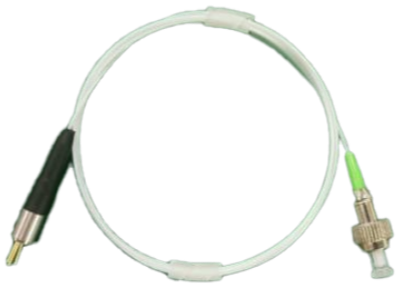 660nm 50mW Coaxial Laser Diode
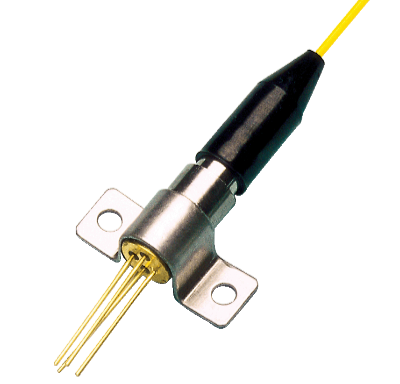 1577nm EML Diode Module
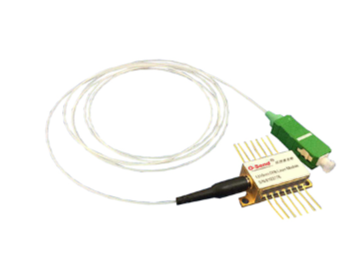 CWDM Butterfly laser diode
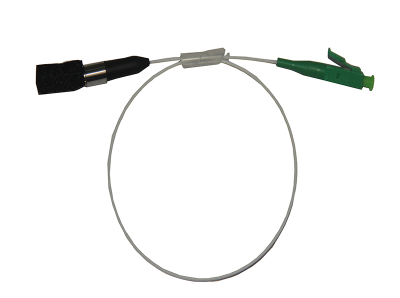 2.5G 1650nm Coaxial Laser Diode Module
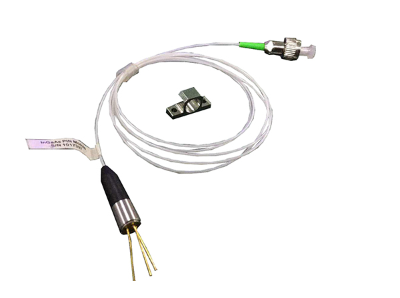 1.25G~10G 1550nm Coaxial Laser Diode Module
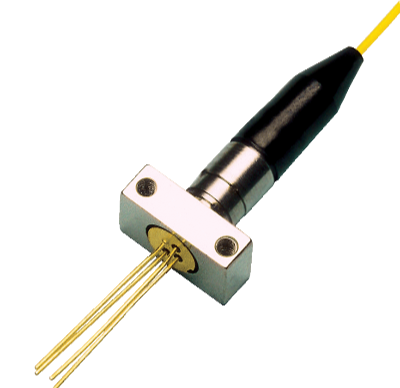 1.25G~10G1310nm Coaxial Laser Diode Module
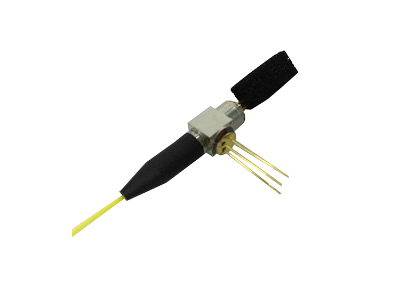 Dual Photo detector Module
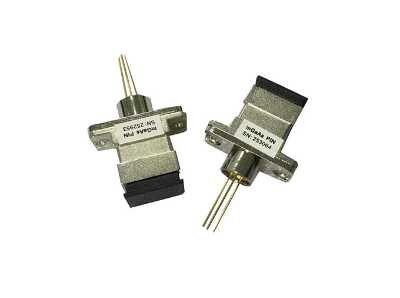 1000um Coaxial InGaAs PIN Detector
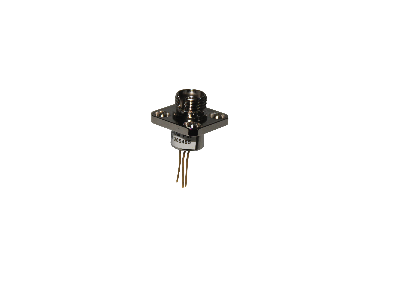 500um Coaxial InGaAs PIN Detector
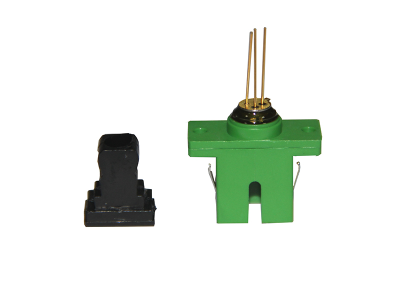 75um InGaAs Photo Diode
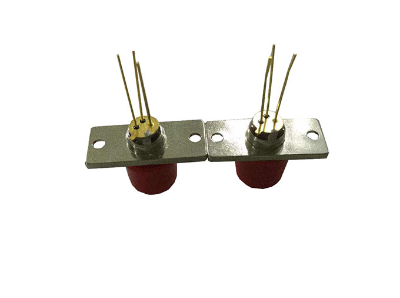 300um Coaxial InGaAs PIN Detector
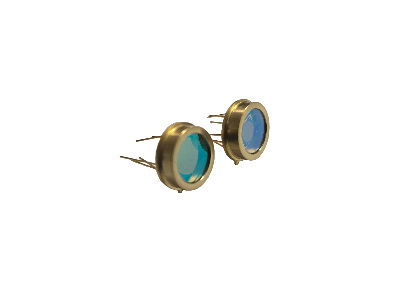 3mm&5mm&8mm Photo Detector
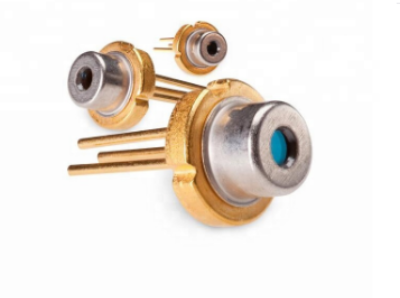 Si APD TO-CAN Module
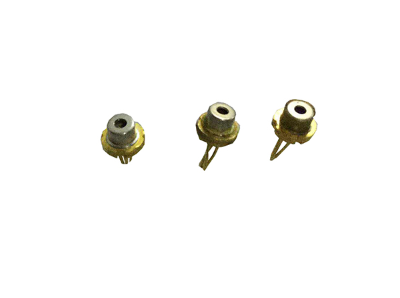 GaAs PIN PD TO-CAN
 1000um InGaAs PD TO-CAN
 2.5G InGaAs PD TO-CAN
 2000um InGaAs PIN Detector TO-CAN